
Conversations with History:
Solo Works by Janina Birtolo
Imagine Catherine the Great giving a Ted Talk in person. Or Marjory Stoneman Douglas. Or Amelia Earhart.
Janina Birtolo has written a dozen beautifully-crafted portrayals of historical female figures that changed the world, for better or for worse. These intimate performances are portrayed by professional actresses who study the character with the playwright. The performers have knowledge beyond the script so they are prepared for audience engagement.
Each play lasts an hour and is told in the first person. Actresses portray the roles in costume with props that they provide.
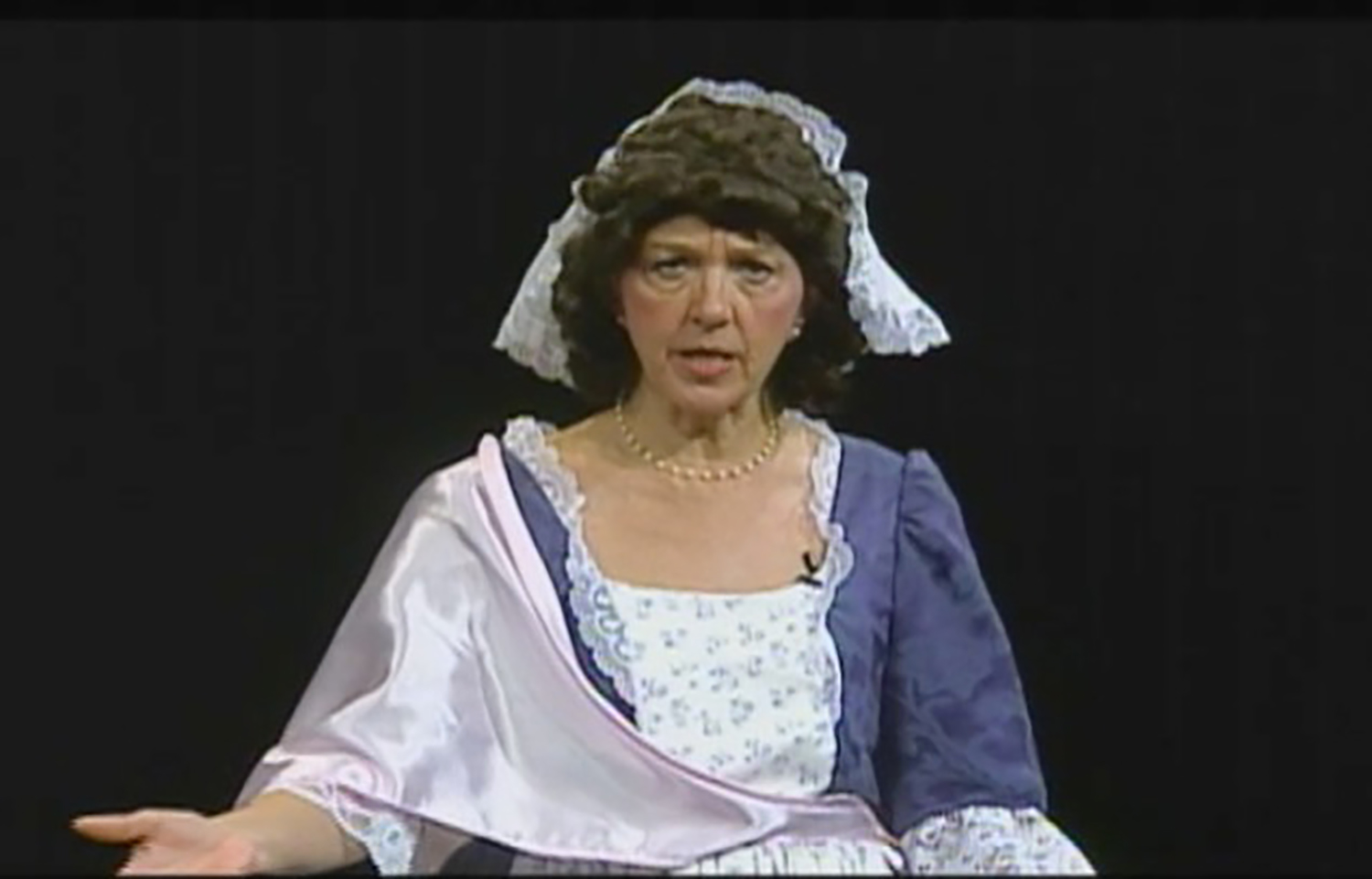
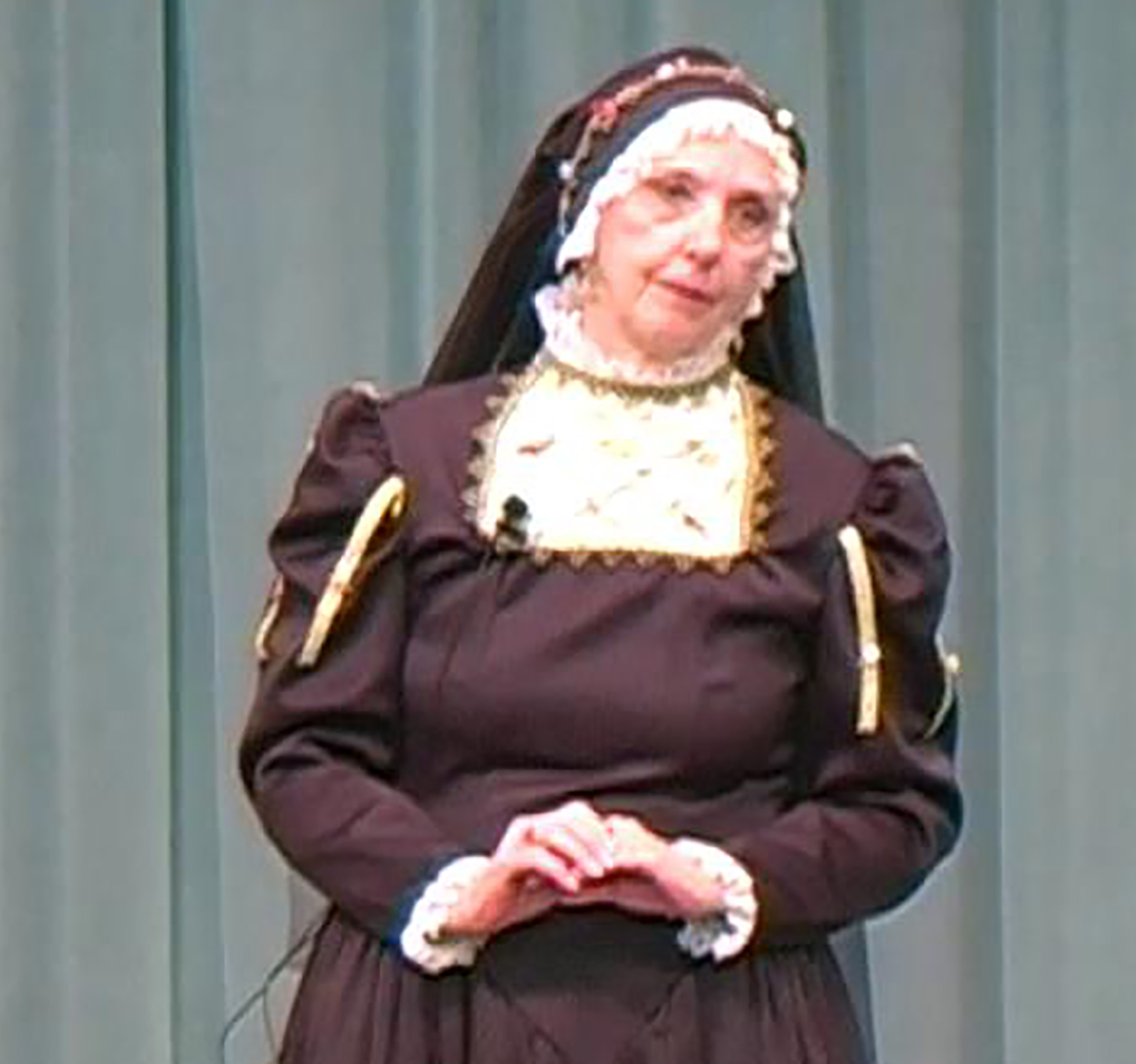
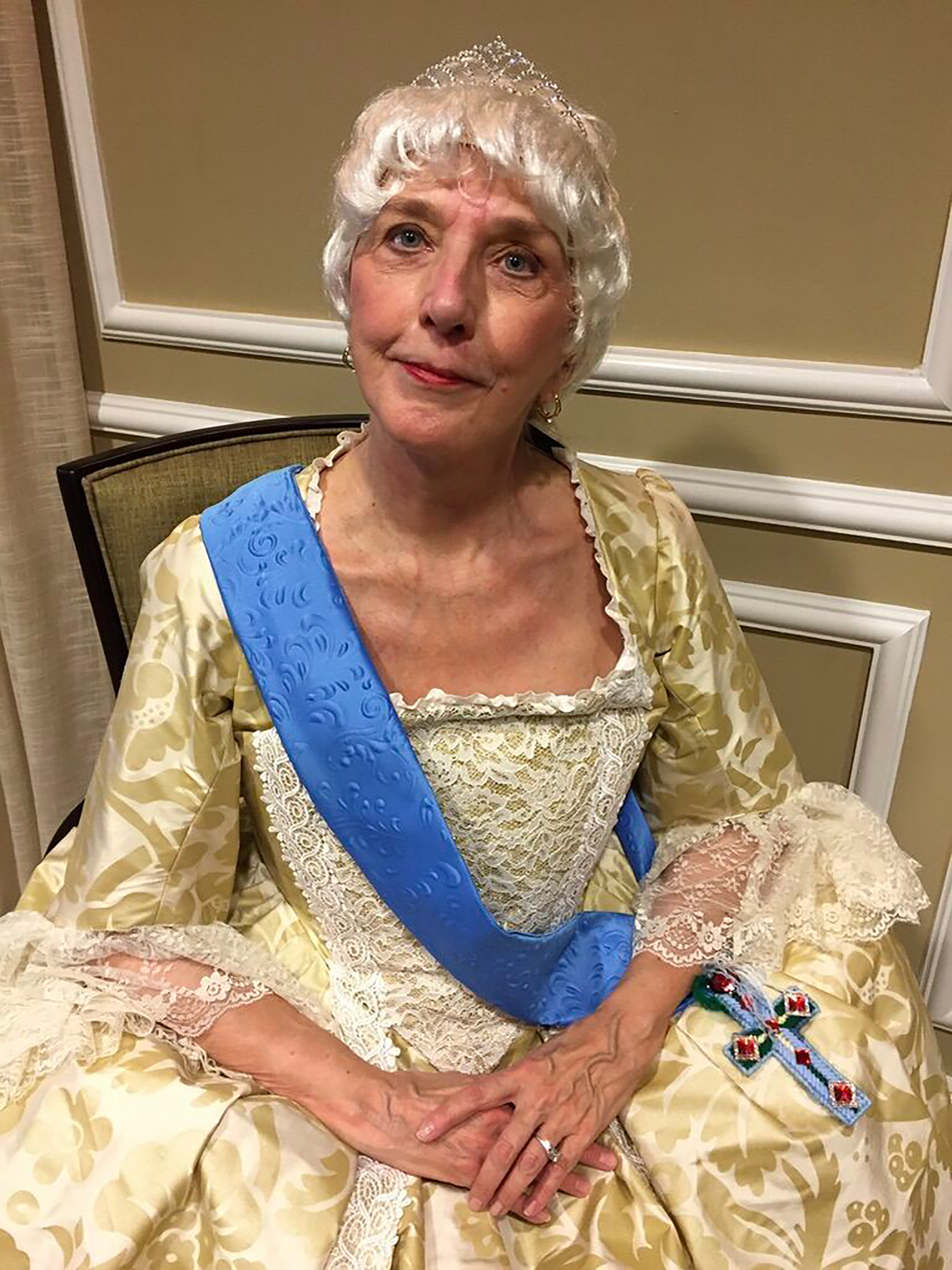
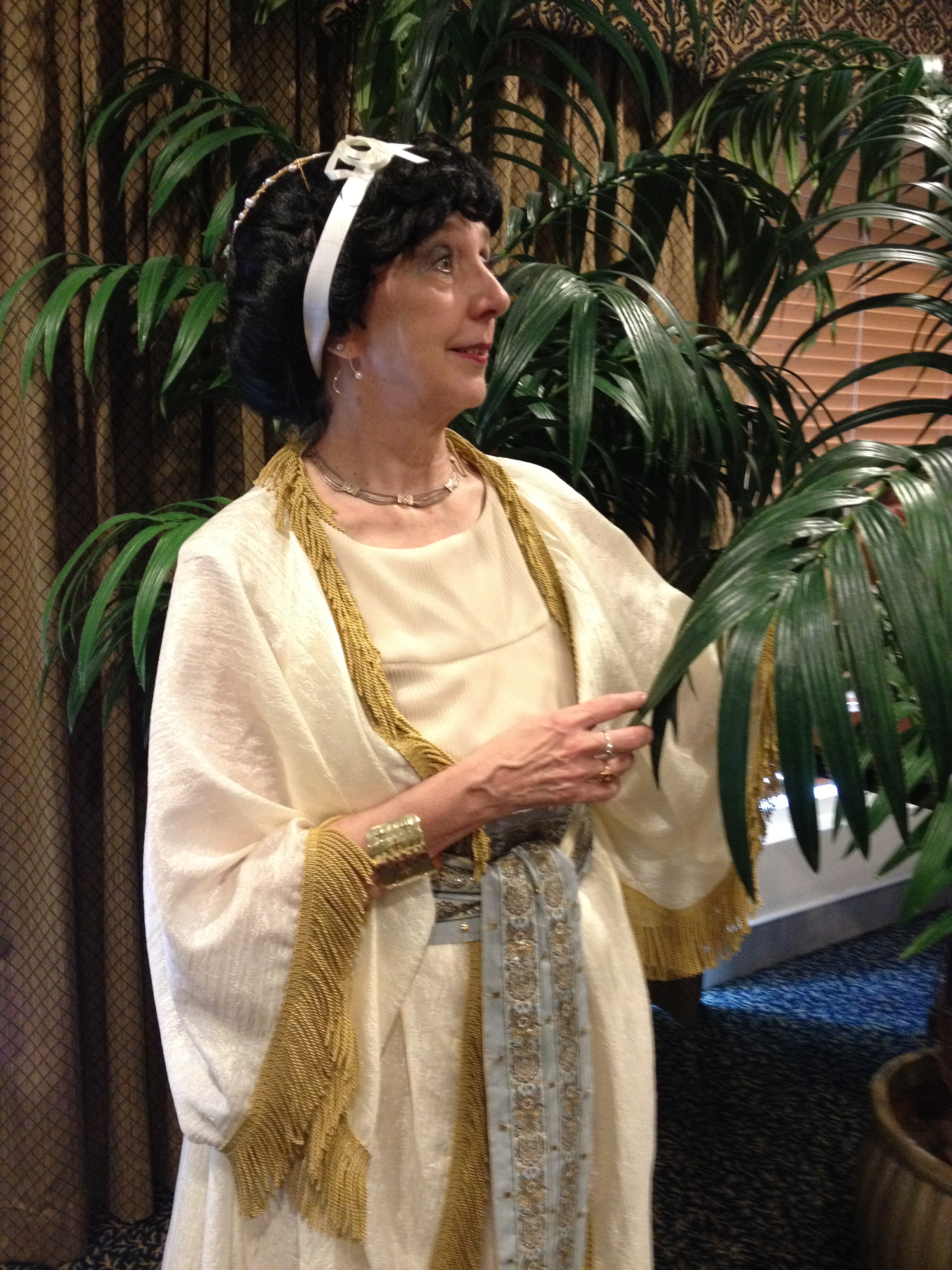



Abigail Adams:
Remember the Ladies
A call to responsibility and duty. In it, Abigail Adams recounts admonishing John to “remember the Ladies” while drafting the country’s new laws and threatening to foment a rebellion if the women are neglected. A feisty, resourceful and determined woman, Abigail cared for the family’s children, farm and finances while John was pre-occupied with the forming and survival of the new United States. Separated for nearly a decade, they maintain a steadfast and romantic relationships defining an era.
Gertrude Bell:
Ghosts of the Desert
The little-known story of the “female Lawrence of Arabia.” A privileged Brit who fell in love with the Middle East, she became the most respected foreign woman in that region in the early 20th century, drawing up the boundaries for what became modern day Iraq. Gertrude tells how she first came to the Middle East, she served as a government spy during World War I and eventually worked to bring King Faisal to power in Iraq. She also offers advice on how to prevent history from repeating itself.

Sarah Bernhardt:
La Vie Divine
Turn-of-the-century French actress renowned for her golden voice and her ability to fully inhabit the roles she played. “The Divine Sarah” moved beyond the stilted, artificial portrayals common in theater at the time. She brought realism and passion. Sarah is dressed as Hamlet, a role she undertook despite doubting critics. A true diva and perhaps the first international superstar, she played such diverse characters as Camille, Cleopatra, Joan of Arc and Tosca – and lived life as largely off stage as she did on the boards, performing long after others would have retired or died.
Catherine of Medici:
The Black Queen
The Renaissance woman who never expected to be a queen, yet went on to be the power behind the French. During her early years in her new country, Catherine was despised and discounted as “the Italian woman.” When she became Queen Regent, however, she proved a skilled a leader during the Protestant Huguenot Rebellion. History has not always treated Catherine kindly, casting her as a villain, a poisoner and a necromancer. But her greatest “crime” may have been one she shared with her contemporary, Queen Elizabeth I of England – that of being an intelligent and powerful woman far ahead of her time.
Catherine the Great:
Rossiya-Matushka (Mother Russia)
The longest reigning and last female leader in Russian history who built her country into a world power. Born in 1729 as the minor German princess Sophie von Anhalt-Zerbst, Catherine gained a new name, title and homeland when she married her second cousin, Peter III, heir to the Russian throne. Disappointed at being pushed aside, Catherine stages a coup and overthrows her hapless spouse. Often denounced for her dictatorial monarchy, she proved an enlightened ruler who did much to bring her adopted country into modern times. Remembered for her many lovers, Catherine’s story is much fuller and more fascinating.
Cleopatra:
How Sharp the Serpent’s Tooth
What is known and imagined about the Egyptian queen who captivated people through the ages. The last of the Ptolemy rulers, Cleopatra was educated, brilliant and beautiful. She was also willing to do what she deemed necessary to retain her kingdom. History painted her as a woman who wielded sex as a weapon, blamed for Mark Antony’s downfall. Hollywood reinterpreted her as a kohl-rim-eyed beauty rolled in a rug. The play examines the sometimes vague historical record and finds a strong, proud, intelligent woman, who knew how to lead.
Marjory Stoneman Douglas:
A Voice for the Everglades
Author of the pivotal book, The Everglades: River of Grass, and an environmentalist who continues to inspire. Douglas helped spread the message of the Everglades uniqueness and vitality to life in South Florida. Twenty years after the establishment of Everglades National Park, she was asked to help defeat plans to build a jetport in the fragile area. Douglas responded by starting the Friends of the Everglades and becoming an environmental activist – at the age of 80! In 1993, she was awarded the Presidential Medal of Freedom. Blessed with a wry humor, a sharp wit and an enlightened perspective, she packed a lot of living into her 108 years of life — and made a tangible difference.

Amelia Earhart:
Daring to Dream
The life and last flight of the famous aviatrix Amelia Earhart. The first woman to attempt around-the-world flight, Amelia was idolized during her life.
Her disappearance evoked tears and sparked numerous conspiracy theories that survive even today. Arrives as if she has just stepped off her plane, she tells how she came to be a pilot and,what that meant to her. Her spirit, drive and strong commitment to equal rights for women becomes clear. The piece is designed as an encouragement to all to reach for the stars.

Galileo: Most Affectionate Daughter
Suor Maria Celeste
Virginia, the elder, illegitimate daughter of the famed 17th century scientist Galileo. The play draws on surviving letters from Maria Celeste to her father to make the case that religion and science aren’t such strange bedfellows after all. At 13, she and her sister were placed in a convent by Galileo, to keep them safe. Two years later, Virginia took the vows of St. Clare and became Suor Maria Celeste. Highly accomplished and esteemed in her own right, she offers her perspective on Galileo’s struggle to remain Catholic while stretching the frontiers of science. A blend of fact, fiction and even quantum physics, all in a historical context.

Mary Todd Lincoln:
In the Shadow of Glory
The achievements and stumbles of the First Lady to one of the best known and loved Presidents in American history. Her Kentucky background and her family’s support of the Confederacy made her loyalties suspect to many. But an even harsher opinion developed in her years as Lincoln’s widow. Three of her four sons, in addition to her husband, preceded her in death, tragedies that haunted her throughout her life. But her outspokenness and refusal to conform to society’s stringent rule, her need for attention and even her misunderstood physical ailments conspired to create a person so out of the mainstream that many in her world – including her one remaining son – judged her insane.
Margaret Sanger:
Woman Rebel
Founder of the American Birth Control League (ultimately Planned Parenthood). Sanger struggled to bring birth control to women in America and the world, despite the Comstock laws and society’s unwillingness to discuss it openly. As a midwife in Manhattan’s Lower East Side in the early 1900s, she witnessed the connection between poverty and the inability to limit family size because of a lack of knowledge. After losing a patient to a self-induced abortion, she decided to devote her life to the cause. A complex and sometimes contradictory individual, her story shows how a poor Irish girl from upstate New York became a voice for women throughout the world.

Ida Tarbell, Muckraker:
The Mind Must Be Convinced
The investigative journalist whose work helped break up the Standard Oil Company monopoly. Labeled as one of the “muckraking” journalists of the early 20th century, Tarbell resented the title and preferred to view herself as an historian. She believed that “the mind must be convinced” by facts, rather than emotion or sensationalism, if positive and permanent change was to come. Her reporting served as the basis for the subsequent anti-trust legislation. Like her fellow muckrakers, she believed the illegalities and injustices of her day needed to be revealed. Yet, for all the power she wielded with words, she remained content in the background – taking notes.
Living history on your stage.
Perfect for intimate spaces and large auditoriums.
 KenAllen Publicity & Bookings